Showing posts with label Hunting and politics. Show all posts

Thursday, March 1, 2012

How a dead mountain lion roars

Dan Richards

One of the things they teach you in hunter education here in California is that it’s wise to avoid parading your dead animals around in ways that offend and upset non-hunters. Put the dead deer in the bed of your pickup, the instructors say; don’t strap it to the hood and drive it around town to show off.

There is, however, a huge exception that is unwritten, but generally understood: When we hunters are among our own, showing off our success to friends is allowed, even encouraged. We post “hero shots” of us with our prey on internet hunting forums. I’ve got a few hero shots on this blog. And the hunting magazines I read gleefully display hero shots of kids with their first (insert game animal here).

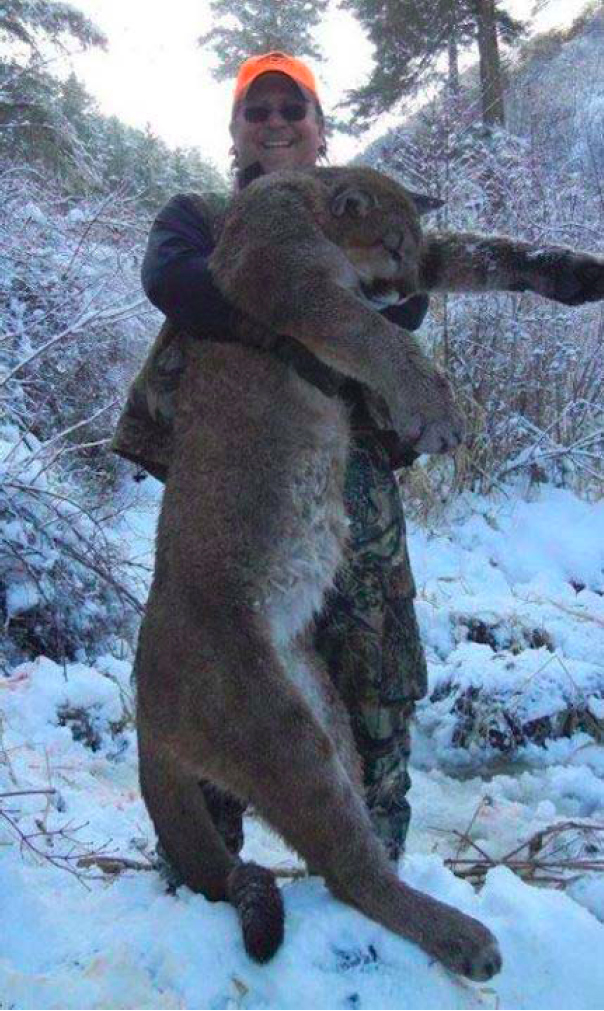
But it turns out there’s an exception to that rule too, and Dan Richards found that out the hard way last month when he sent a photo of himself holding up a mountain lion he killed in Idaho to the Western Outdoor News, a weekly hook-n-bullet newspaper.

While his hunt was 100 percent legal in Idaho, it would’ve been illegal in California, because Californians have repeatedly voted to ban mountain lion hunting.

So, who cares, right?

Here’s the hitch: Richards is the president of the California Fish and Game Commission.

Now who cares? The Humane Society of the U.S., which is ever alert to opportunities it can exploit. HSUS pitched a fit, alerted its members and started spouting off to the press.

“It’s not illegal. But he’s thumbed his nose at the people of California,” HSUS president Wayne Pacelle told the San Jose Mercury News. “He’s supposed to be representing the interests of all California citizens. It seems like such a tone-deaf action. What part of ‘no’ doesn’t he understand?”

Well, that’s ridiculous, pure and simple. California voters banned gay marriage in 2008 – a decision I disagree with as much as I disagree with the mountain lion hunting ban – but I don’t hear anyone screaming about gay Californians who get married in other states where it’s legal.

The problem is that logic is irrelevant here: Non-hunters, especially non-hunters in California – have a visceral reaction to predator hunting. It doesn’t matter that Richards did nothing wrong, because he did something unwise by putting it out there where the anti-hunters could exploit it.

There is a long list of people who are now calling for his resignation, including a raft of Democratic state legislators, who have the majority in both houses, and the authority to vote for his removal.

Interestingly enough, the list also includes Democratic Lt. Gov. Gavin Newsom, who won national attention in 2004 when, as mayor of San Francisco, he ordered the city-county clerk’s office to issue marriage licenses to gay couples, despite the fact that gay marriage wasn’t legal. (Uh, what part of ‘no’ doesn’t he understand?)

Sadly, it just doesn’t matter that this is a kerfuffle rife with hypocrisy. This is a state under one-party control, a state whose major population centers – Los Angeles and San Francisco – are pretty sympathetic to the animal-rights cause, even as many of their denizens line up to gobble burgers made from dead cows at trendy fast food places like In-N-Out Burger.

Richards may lose his position on the Fish and Game Commission, and if he does, hunters here will likely pay the price. All of us.

Will hunting be banned without him on the Commission? I doubt it. But will hunters’ rights and opportunities erode faster? In all likelihood, yes.

There is, however, one wild card in this hand, and that’s Democratic Gov. Jerry Brown, known nationwide to people of a certain age as Gov. Moonbeam. While the Legislature can remove commission members, it’s the governor who appoints them, so it would be his call on who would take Richards’ place if he’s ousted.

This is Brown’s second time around as governor after a nearly three-decade break, and he’s not always predictable. When he was gearing up for his 2010 run, he brilliantly posted one of those "25 Random Things” memes on Facebook, and one of them was this:

13. I’ve been duck hunting with Chief Justice Warren, but not with Vice President Cheney.

So, if Richards is booted, Brown could surprise us and appoint another hunter. But with the precarious state of hunting here in the land of fruits and nuts, I’d just rather not be in a position where I have to depend on that.

© Holly A. Heyser 2012

Friday, April 29, 2011

Tweetweek: A predictable bear editorial, a credit card company that hates hero shots, and NYT love

Not a slave to Twitter? No problem - here's my Tweetweek in Review:

L.A. Times on bears: I'm sure it will come as a shock to everyone that the L.A. Times just posted an editorial that takes the HSUS position on black bear hunting hook, line and sinker.

This is to say that the venerable Times thinks our Fish & Game Commission needs to back off a proposal to raise the statewide bear cap next week from 1,700 to 2,000. Instead, the Times says, it should take time to study regional bear populations to see if there are any variations that should be taken into consideration.

Granted, we do apply some special limitations in some regions on deer hunting so it's not like the idea is inherently freakish. It's just that ... hmmmm ... the HSUS's biologist suggested taking that route but for some reason didn't mention that there is really any hint at all that there are any regional bear population problems.

Given HSUS's propensity for, and considerable skill at, exploiting any advantage it can get, I'd think HSUS would've mentioned it if there's a sensitive population that warrants extra consideration. Funny, eh?

Then at the end of the editorial, the LAT recommends banning hunting bears with hounds because animal rights activists think it's unsportsmanlike.

Naturally, I tried leaving a comment on the LAT site, but of course, the comment feature doesn't seem to be working this evening. I hit "post" and nothing happens. No spinning wheels, nothing. So, L.A. Times, here's my comment, and I hope I don't see 17 copies of it on your site tomorrow:

"(T)he bigger question is how bear populations are faring region by region in the state."

Bigger question, indeed! Is there a region where we have some hint that bears, as a species, are in trouble? Do you really believe that if there is such a region, the HSUS, with its vast resources, hasn't heard about it? I looked for, but did not find, hint of it here.

"Animal welfare advocates have argued for years that this is unsportsmanlike."

Tell me, what do "animal welfare advocates" consider sportsmanlike? Could it be that they use the term to sound reasonable, when in fact, they not only oppose all hunting, but all consumption of animal flesh? I don't hunt with hounds, but nor do I look to people who oppose hunting for guidance on hunting sportsmanship.


Two fun facts before I close:

1) Hank and I are eating bear tonight - and this was planned well before we saw the editorial - but I think I'll have seconds now, just because.

2) I will give the LA Times credit: Last time they covered this topic (which I wrote about here), it was with an incredibly biased "news" story. This time, at least, the opinion is showing up in the proper section - the opinion section. That's where newspapers are supposed to take positions. It just so happens that I don't think this position was well-reasoned.

Speaking of HSUS: Gwyn Zetah-Meitin used to be a member of the HSUS, and she loathed hunting. The night she met Patrick Meitin, she made it clear she hated hunters.

"She listed the usual indictments against slobs who spotlight and kill animals out of season, are interested in antlers only as collection pieces, shoot roadside signs and toss beer cans from vehicle windows," Meitin writes.

"I smiled and offered my stock reply. 'We're in agreement then,' I said, pausing for her look of confusion. 'I hate them too. But of course, you're not talking about hunters. You're talking about jerks who happen to own firearms.'"

You can already figure out one part of the story by the way the woman's last name closely resembles his now. You can figure out another part when you see the title of the piece: "My Wife, The Bowhunter."

It's a long piece (said the pot, calling the kettle black), but well worth the read as it culminates in her first - you got it! - black bear kill. What she says about that kill at the end is something pretty much every hunter will be familiar with, but something the folks at, say, the L.A. Times would do well to read.

I really wanted to leave a congratulatory comment on the story, but the Petersen's doesn't seem to have a comment function at all. Hopefully the folks there will see my praise for the story here.

Why I'm glad I don't use my Capital One card anymore: Capital One loves to tout the fact that cardholders can design their own card, but when New Jersey cardholder Lou Hinger tried to upload a photo of her husband posing with a deer he'd killed, CapOne said it was "unacceptable."

The problem? “Sorry, we were unable to approve the image you submitted. We will not approve any images that contain the following: Violence, hatred, or cruelty to humans or animals, profanity obscenities or any type of death imagery.”

So, hey, farmers, don't you dare upload pictures of the cows you plan to slaughter. And foodies, whatever you do, DO NOT UPLOAD PHOTOS OF JUICY STEAKS! You sick, animal-hating bastards.

You can read the whole story at NRAhuntersrights.org, but - spoiler alert! - the good news at the end is that if you have an NRA card, you can customize it with your hero shots.

Shameless self-promotion: Hank's upcoming book, Hunt, Gather, Cook: Finding the Forgotten Feast, got a glowing mention in the New York Times last week.

I love the New York Times. The newspaper has shown incredible openness to hunting, and appears to get the fact that a lot of people hunt for a lot of good reasons.

The book comes out May 24, but you can pre-order it here.

Hint, hint.

Gratuitously funny video ending: I don't have time to cruise YouTube, but my students always turn me on to the best stuff. Like a baby penguin being tickled:


Have a good weekend, everyone!

© Holly A. Heyser 2011

Wednesday, March 16, 2011

California bear hunters: Time to speak up

California's black bear population is thriving, and our state's Department of Fish and Game is responding with a proposal to increase the number of bears we hunters can kill each year from 1,700 to 2,000.

Predictably, HSUS is up in arms about the proposal and mobilizing its minions in opposition.

Why does this matter? Because we are in the last few days of a public comment period when people can weigh in on the proposal. These comments from the public will be taken under consideration by our Fish and Game Commission when it decides the matter.

If you're a California hunter, or if you don't hunt, but support lawful hunting in California, please take a few minutes to email DFG in support of this proposal - we don't want HSUS supporters to be the only ones emailing about this. (In case clicking doesn't automatically open an email for you, the address is WILDLIFEMGT@dfg.ca.gov.)

After you've sent that email, please share this post with your friends and ask them to do the same. The deadline is 5 p.m. Monday March 21.

Unlike HSUS, I will not write your email for you - having covered politics, I can tell you that decision-makers have a lot more respect for individually-written emails than auto-generated carbon copies.

And unlike HSUS (see "up in arms" link above), I will show you where you can get some facts about the bear-hunting proposal: Here's a link to the state's 107-page draft environmental impact report on the proposal.

But don't worry: If you don't have time to read through that, I've highlighted some key facts below:

1. Like I said, the bear population is thriving. Check out this chart from page 22 of the report:


Wow, big increase, right? Yeah, about 470 percent (I'm guestimating because I'm going off the chart, not raw numbers). That's huge.

2. The bear harvest isn't increasing at even close to the same rate as the bear population. Here's a chart I made from numbers on pages 11-13 of the report:


Wow, much smaller increase, isn't it? Yeah. Exactly 143 percent.

Oh, and in case you noticed that the harvest number has gone over 1,700, here's why: That limit is a cap, and DFG cuts off bear hunting by Dec. 26 or whenever that cap is reached. But there's a lag time between when bears are killed and DFG gets tags back from hunters, so sometimes we go over the cap. This year, we stayed well under the cap at just shy of 1,300. All of this is factored into recommendations regarding the cap.

3. The proposed increase in the bear hunting cap is consistent with state policy, established by our Legislature, which calls for providing hunting opportunities when they are consistent with maintaining healthy wildlife populations (page 8 of the report).

4. The proposed increase would still keep us well within the limits of how many bears can be killed without causing the population to decline. Wildlife managers believe that limit could be raised to 3,100 - far more than the proposed 2,000 (page 25 of the report).

5. Black bear is an excellent food source for families. You can get a lot of bear meat for a $41.86 tag, which is pretty important in a state whose economy is still in the toilet. Our unemployment rate is still 12.4 percent, compared with 9 percent nationwide (click here and scroll down for complete data).

Bear is tasty and filling! I haven't gotten a bear yet, but a friend of ours did last fall, and he shared some of the meat with us. These bear pelmeni that Hank made with the meat were incredible.


Sounds like a lot of good reasons to raise the bear hunting cap, if you ask me.

But before I wrap up, I think it's worth noting that HSUS continues to rely on emotional appeal, telling its supporters that this proposal "seems designed to placate a handful of hunters' desires to chase down more bears with their dogs while adding more heads and hides to their collection."

Or at least, that's what it says now. In a Feb. 3 blog post, HSUS said, "There is no one clamoring for an expanded quota..." So, which is it?

Oh, and by the way, HSUS doesn't have a single bit of data supporting its claim that California bear hunters are motivated by heads and hides. Those folks just like to say that because it riles up their supporters.

© Holly A. Heyser 2011

Thursday, November 18, 2010

Bear hunting: A tale of two polls

I seem to have bear on the brain these days. Got my first bear tag ever this year, but I haven't filled it yet. Ate my first bear ever tonight, and damn, it was good. And then there's the latest in the bear wars.

A couple days ago, I came across this delightful little gem: The Philadelphia Inquirer reported that a majority of New Jersey voters believe bear hunting should be allowed "if wildlife scientists conclude that bears are exceeding their recommended habitat limits and are destroying private property."

Well, isn't that interesting! I distinctly remembered a poll commissioned by the Humane Society of the U.S. in New Jersey this spring that made it seem like New Jerseyans hate bear hunting. "New Poll Reveals NJ Residents Oppose Trophy Hunting of Black Bears," the headline blared.

So what's going on here? Look below the headlines and you'll see.

But first a little background: New Jersey was one of HSUS' bear battlegrounds this year. The state, faced with burgeoning bear populations, wanted to allow bear hunting again for the first time in some years.

California also wanted to expand bear hunting this year because it's seeing similar growth in bear populations, and HSUS fought the bear wars here too. In fact, I wrote back in April how peeved I was that every HSUS quote about the bear debate in California referred to "trophy hunting" of black bears.

The public takes a dim view of the notion of people hunting just for a head on the wall, so HSUS starts flinging around the word "trophy" whenever it wants to win on a hunting issue. Never mind that putting a head on your wall does not preclude feeding your family with the meat. Never mind that it's illegal to waste bear meat in California.

Long story short, Cali officials backed down in the face of HSUS histrionics, while New Jersey stood firm and its bear hunt will take place Dec. 6-11.

Now, back to those dueling polls. Let's take a look at the first question in the HSUS-commissioned poll:

The state of New Jersey has protected black bears since 1970 with only two trophy hunts permitted in the past forty years. The state is now considering allowing hunters to kill up to 400 black bears. Do you support or oppose hunting of black bears in New Jersey?

Amazingly, despite the loaded language, 35 percent of respondents (registered voters) said they support bear hunting. Forty-five percent opposed it; 20 percent said they were undecided.

Fast-forward to October, when Fairleigh Dickinson University does a PublicMind poll of New Jerseyans on the issue. It split a bunch of registered voters into two groups and asked each one a different version of the bear-hunting question. Here's the first one:

Now thinking about New Jersey wildlife including bears, do you agree or disagree with allowing bear hunting in New Jersey if wildlife scientists conclude that bears are exceeding their recommended habitat limits and are destroying private property?

Honestly, that's just as loaded as the HSUS question. HSUS painted bears as victims of trophy-hungry hunters; this poll painted humans as victims of out-of-control bears. And the results are predictable: 53 percent supported bear hunting under those conditions, 36 percent opposed it and 11 percent were unsure.

Then there was the second question, stripped of emotional taint:

Now thinking about bear hunting in New Jersey in general, do you approve or disapprove of allowing a bear hunting season in New Jersey?

The results? Forty-nine percent approved, 33 percent disapproved, 18 percent weren't sure.

If you look at it in a chart, it's pretty clear:


In case you're wondering, the margin of error refers to the accuracy of the poll. In the case of the HSUS poll, its margin means that if you actually counted all New Jerseyans' opinions on this matter, the results would be no more than 4 percentage points higher or lower than the numbers in the poll results. That figure is 5 percentage points for the Fairleigh Dickinson poll, making it less accurate than the HSUS poll. But even if you factor in those margins, you still get statistically significant variations depending on how you ask the question.

Now, strictly speaking, it's not a good idea to stack two different polls against each other, particularly when they were taken six months apart, using different methodologies. But I think there's a valid point to be made here: If you run around saying "Trophy hunt! Trophy hunt! Trophy hunt!" - which is exactly what HSUS was doing last spring at the time of its poll, not to mention in the poll question itself - it does affect public opinion.

And that's why I call BS on the HSUS when it trots out this rhetoric - it's a bad idea to let it go unanswered.

For the record: Do you want to know what kind of trophies we dig in my house? This kind:


Those are pelmeni, Russian bear dumplings. The bear was courtesy of Cork Graham, and the food was prepared, of course, by Boyfriend, who blogged about it here. It was my first taste of bear ever, and it was amazing - distinctive in a way I can only describe as sturdy, but not at all overbearing (pun slightly intended). It had a little whiff of porkiness, but not much. It was damn good. I want more.

Bear hunting, anyone?

© Holly A. Heyser 2010

Sunday, October 31, 2010

North Dakota Measure 2: Watch your step, folks - it's slippery out there

A couple of days ago, I got this treat in my inbox - a link to an ad paid for by HSUS about Measure 2 in North Dakota. The HSUS says the ad features "licensed North Dakota hunters" - none of them named in the ad itself - who support a ballot measure that would effectively ban high-fence hunting in that state.

Now, whether or not these are real hunters or actors who got licenses would be fun to debate, but that's not my concern here. Nor am I about to launch into a lecture about the perils of hunters jumping into bed with HSUS, as amusing as that would be.

My concern is a disconnect I see among some hunters - embodied in Measure 2 - and how that can be exploited in the future, both in North Dakota and elsewhere. Follow me here for a little bit: Read more...
My understanding is that Measure 2 was proposed by hunters, and I get the sense that there are a fair number of hunters nationwide - or at least a very vocal group of hunters - who oppose high-fence hunting for deer, elk and exotic species. The biggest complaint is that it's not "fair chase" because the animals can never truly escape, and they're at least semi-domesticated - accustomed to human presence, which stacks the odds against them.

At its most hyperbolic, this loathing centers on an image cited by the hunters in this ad: You look at a bunch of penned animals, you pick one, it's released and you shoot it. That's pretty distasteful, especially coupled with the notion that it's some rich guy paying for a petting-zoo hunt so he can mount a head on his wall and pretend he worked for it. Don't we all hate that guy?

Personally, I've seen only one high-fence ranch, and it's not like that at all. It's 1,000 acres in brutally steep terrain, and you can have a hunt ranging from pretty damn easy to really strenuous. But animals are not released from a pen for your shooting pleasure. And honestly, I have no idea whether the norm is closer to what I've seen or the petting-zoo ranch.

How do I feel about high-fence ranches? First, I kinda have a knee-jerk Libertarian response: If you don't like it, don't do it. With more thought, I'm fine with standards about the size of the land and the treatment of the animals. And I'm definitely OK with all the record-keeping organizations putting an asterisk next to trophies killed inside fences.

The reality is that in our society, we have decided it's OK to kill animals and eat them and mount their heads and whatever else we want to do, and so long as our methods of killing don't cause extended suffering, the rest is window dressing.

But let me get to the meat of it (pun intended): I see precious little difference between high-fence ranches and clubs where you can hunt planted birds, and this is where I see a HUGE disconnect among hunters: Many who oppose high-fence ranches will support planted-bird clubs.

Why do I think they're similar when there's no fence confining the planted birds? Well, because these birds are raised in pens, they have no survival skills and if they're not shot promptly by hunters, chances are they'll be hawk food in days. Hell, these birds have less of a chance of a full and free life than do the animals at high-fence ranches - at least the one I've been to.

And if we're honest, we'll all admit hunters like both types of clubs or ranches for the same reason: For a set investment of time and money, they have much higher odds of success. The only difference is with planted-bird clubs, many hunters need such facilities to keep their hunting dogs happy and sharp. I certainly see a lot of that here in California, where our wild pheasant population is pretty anemic.

Now it's time to tie a bow on this, which requires that we look at the meat of Measure 2:

A person is guilty of a class A misdemeanor if the person obtains fees or other remuneration from another person for the killing or attempted killing of privately-owned big game species or exotic mammals confined in or released from any man-made enclosure designed to prevent escape.

Did you catch that phrase? Or released from. Why, my goodness, this law would apply to clubs that plant pen-raised birds if it weren't for that other phrase: Big game species or exotic mammals.

Folks, do you have any idea what that last phrase is, "big game species or exotic mammals"?

I bet you're familiar with it, because it's election season, and it's a favored whipping boy in American politics.

It's called a loophole. Maybe you thought loopholes looked really creepy or insidious, but I spent ten years covering politics for major newspapers in in three states - Virginia, Minnesota and California - and I can tell you that this is exactly what a loophole looks like. And here's why it matters:

Let's say North Dakota voters pass Measure 2. A couple years down the road, someone - no names named, here - is going to want to get rid of that loophole. Here's how the campaign ads (or testimony before the Legislature) will probably go:

In 2010, North Dakota voters wisely decided to make it illegal to hunt animals raised in or released from pens, but unfortunately, there was a loophole in the law: It applies only to big game species. Why don't other species deserve that same protection? Help us make North Dakota law more humane - extend these protections to all animals.

(Cue the weepy music.)

Perhaps you disdain slippery-slope scenarios, but they are reality in politics. Hey, in California, we legalized medical marijuana in 1996, and on Tuesday, we've got the why-not-legalize-it-all-the-way proposition on our ballot.

Here's the funny thing: I don't have a dog in this fight. I've hunted planted birds, and I'm no longer interested in it because I find the odds unfulfilling. I may do it again if it means a chance to acquire meat we need and keep my shooting sharp, but generally I'm declining these invitations.

Same goes for high fence hunting. I've kinda done it - I hunted pigs in an insecure perimeter of a high-fence ranch (in other words, they could get in and out at will), and I killed a Corsican sheep inside secure boundaries because we were planning a feast and needed more meat. But now, with four years of hunting under my belt, I crave more challenge. I want to know odds are high that I will fail because it makes success all the more sweet.

But I really don't care if other people want to hunt this way, or "shoot," as it's called at some bird clubs to dismiss any illusion of challenge. I don't care that people want and are willing to pay for different levels of challenge.

Personally, I think challenge is a spectrum, and I'm loathe to decide which hunter gets to say, "Anything easier than this is illegal; anything harder than this is OK." Good Lord, what if Tred Barta were calling these shots? Most of us would have empty freezers!

Mostly, I'm bothered by hypocrisy. "It's OK to kill birds this way, but not deer" - as if birds' lives have less value. Or their lives are less valuable because their deaths help keep our dogs sharp.

All I've got to say is this: If you're a North Dakotan, please examine your values closely before you vote; this is no time for a knee-jerk reaction. And if you live in another state, it wouldn't hurt to do the same honest self-assessment. You never know when something like this will appear on your ballot.

All right, now. You know how I feel.


UPDATE:North Dakota voters gave Measure 2 the smackdown last night - it lost 43 percent to 57 percent.
© Holly A. Heyser 2010

Friday, June 18, 2010

Hunters, you've been played

When I got a press release yesterday from the California Department of Fish and Game urging people to "leave young wildlife alone," I groaned.

The campaign itself is excellent: It's a message urging well-meaning people not to "rescue" baby wild animals they think have been abandoned, because usually they haven't been abandoned, and the "rescue" can be very harmful to them.

But when the HSUS announced last month that it was partnering with the Wisconsin DNR to produce and air a couple 30-second radio spots on this topic, a battle ensued, and I can say unequivocally that the result was HSUS 2, Hunters 0 - something I don't want to see repeated here. Read more...
Before I explain that score, I need to state very clearly that I couldn't care less if HSUS wants to take some of the money it usually uses to fight legitimate, lawful and ethical hunting and give it instead to a cause hunters can support. Seriously, go ahead!

What hunters need to understand, though, is that there are calculated benefits that HSUS can expect to receive in return for its money, which totaled $6,000 for the Wisconsin radio spots.

The first benefit is that HSUS looks good for participating in the program. That one's a no-brainer. We all look good when we donate money to worthwhile causes and get our names associated with those causes. I think it's safe to say that's a huge motivation for a substantial chunk of the philanthropy that takes place in the United States. Any of you who have raised money for a non-profit will agree with me on this one, right?

It's the second benefit that kills me, though, because it's insidious, and hunters played right into it.

You can predict what happened when the Wisconsin partnership was announced, right? Hunters were pissed, and they slammed Wisconsin DNR for taking money from, and partnering with, an organization that's anti-hunting.

Believe me, I understand the resentment. When the agencies we fund take money from organizations that would like to end what we do, it's insulting.

But here's the problem: The non-hunting public doesn't understand our reaction. Members of the non-hunting public, most of whom mistakenly believe that HSUS is an umbrella organization for local animal shelters, look at what the HSUS did, and how hunters reacted to it, and think, "Well, why would a cash-strapped state agency turn down free money for a good cause?"

The folks at HSUS must have been jumping for joy, because here comes Benefit No. 2: In response to the hunter outcry, the HSUS placed a bunch of op-eds and letters to the editor in Wisconsin newspapers sweetly bemoaning hunters' shortsightedness. Check out an excerpt from this letter placed in the Lakeland Times:

It's a shame that some are so ideologically rigid that they believe two groups cannot work together unless their positions on every issue are perfectly congruent.

We at The HSUS see things differently. This project is only one piece of our national efforts on behalf of wildlife. Many of our campaigns are supported by thoughtful hunters. Some are not.


Benefit No. 2 is a two-fer: HSUS gets additional publicity for itself by placing these commentaries in newspapers, and it makes hunters look bad. And make no mistake, every time hunters look bad publicly, it is a nail in our coffin because it costs us public support. HSUS loves that. And all too often, we hand it to them.

Ever watch a manipulative child pull a sibling's hair until the sibling lashes back, and then the sibling is the one who gets in trouble? Sound familiar?

Wisconsin isn't the only place this has happened - hunters in California have also reacted angrily when our DFG has taken contributions from HSUS for its poaching hotline, with similar outcome.

So what do hunters need to do to avoid getting played like this? I have a few ideas to start with:

1. So what if HSUS wants to give money to our wildlife agencies! Instead of complaining, why not take advantage of the opportunity to point out that hunters and anglers provide the vast majority of funding for wildlife habitat, management and enforcement, and to say that we welcome the little bitty contributions that HSUS wants to add to that vast ocean of money?

2. If we don't like being "shown up" by the HSUS, we could ask some of the many organizations that represent us to donate to similar causes, whether it's baby wildlife protection or poaching enforcement. Or ...

3. We could point out that we already provide the majority of funding for these agencies, and rather than make additional contributions, we choose to channel the money we give to non-profit organizations into the most pressing concern there is for wildlife: habitat. Personally, I'm happy that the organization that gets most of my contributions - California Waterfowl - is using that money to give ducks more and better places to live. Without habitat, the rest of this stuff is moot.

4. If we don't want to do any of those things, let's at least remember this: Folks at HSUS love getting the opportunity to make hunters look like we don't care about baby wildlife, or poaching enforcement, or whatever message the HSUS is on at the moment. But they can only do that if we help them, so let's not, OK?

By the way, when I clicked on that California press release about baby wildlife yesterday, I saw no mention of HSUS, so for now we won't have a repeat of the Wisconsin situation. But I guarantee you it won't be long before HSUS donates some cash or sets up some sort of partnership with our DFG. I can only hope we give it some careful thought before we react.

© Holly A. Heyser 2010


Wednesday, May 12, 2010

Lead ammunition, politics and rhetoric

This is the post I've been waiting a month to write. It hasn't taken this long because I don't know what to say; it's taken this long because because I've been trying to figure out how to say it without my fellow hunters thinking I've drunk the Kool-Aid.

Unfortunately, I still haven't figured that out, so I'm just going to man up (so to speak) and get it over with:

1. I'm done hunting with lead ammunition.

2. I believe the key people pushing hunters to move away from lead ammunition are just folks who work with birds that get sick and die from lead poisoning, and they see the problem as preventable. I don't believe most of them are anti-hunting; in fact, I know some of them are hunters.

3. The California lead ammunition ban has been a complete disaster that has created unnecessary antagonism between two groups of people with a common goal: healthy populations of wildlife. My state embarrasses me. Arizona handled this much better than we did.

So what brought this on? It started on a pig hunt last month. Or maybe it started earlier than that.

Last year when I wrote a story about California's lead ammo ban for the National Wild Turkey Federation's Turkey Country magazine, two of the people I interviewed were Jake Theyerl of the Institute for Wildlife Studies and Jim Petterson of the National Park Service, both of whom were involved in research and outreach efforts on non-lead ammunition, both of whom are hunters.

They were interesting folks. Most people in the hunting community were pretty pissed off about the lead ammo ban in the California condor zone. Gun and hunting groups were vigorously challenging the science that suggested condors were getting sick and dying when they ingested lead bullet fragments left in gut piles or unrecovered game. Some were characterizing folks behind the ban as anti-hunting.

But here were two hunters who believed that the science was right. They didn't take a position on the ban, mind you; they just believed that yes, birds get sick and die when they eat lead, and that some of the lead that was doing this was indeed from ammunition.

A pivotal moment for Jim came when he was tracking condors in Arizona and came across a deer that had been shot but not recovered. Three condors, a golden eagle, a bald eagle, ten turkey vultures and ten ravens were all either feeding on the deer or waiting to feed on it when he and his colleagues arrived.

They turned the animal over and found a bullet wound in the neck. They decided to have the deer X-rayed and were was stunned at what they saw. As a hunter, Jim had always believed that cutting around bloodshot portions of meat would eliminate all the lead fragments. But the X-ray showed that lead had exploded far beyond the immediate vicinity of the wound channel:


They stopped counting fragments after they hit 400.

"Looking at the X-ray and looking at the bloodshot portion made me think,'How much lead have I been trimming off and putting into burger piles?'"

But it also made him think about the birds. The deer had landed wound side down so the scavengers had not yet begun to pick at the lead-infested wound site. "Had it landed on the other side, they could’ve fed on it. It just pointed out to me how one carcass could have a disproportionally large impact."

Months after that interview, I got an email from Jake saying funding had run out for his job and he was leaving the state, but he wanted to arrange for an opportunity for me and Phillip from the Hog Blog to check out the condor program at Pinnacles National Monument and go hunting for wild hogs near the national park with Jim.

An opportunity to hunt pigs, meet Jim, and possibly lay eyes on a condor for the first time was too much to pass up. We made plans and before long, Phillip and I were meeting Jim in pre-dawn blackness at the Pinnacles visitor center and following him out to the ranch where he occasionally hunts.

It was a beautiful day - the wildflowers were in full bloom.


But we did not see a single pig.

After giving up on the hunt, we went back to Pinnacles with Jim so he could show us around. First stop: The storeroom that functions as an office where employees could watch a webcam that was trained on a condor feeding station:


And of course, we started talking about lead ammo, the ban, the science and the politics.

Now, up until this point, here's where I stood on lead ammo: Because I often hunt in the condor zone, where lead bullets are banned, I've opted to shoot only non-lead in my rifle. It's expensive at $40+ per box, but when it comes to killing, the goal is to use one bullet and if I pay $2 to kill a pig or deer instead of 50 cents, that's just no big deal. If I wanted to switch back and forth, I'd have to go to the range to re-sight my rifle each time, because lead and non-lead can shoot very differently. It's just easier to stick with one bullet.

For small game and upland birds, I often hunt with steel shot. My first love is waterfowl hunting, which means I have lots of steel shot around the house, so it's just convenient to use it for other hunts.

However, I'd use lead, too. In fact, the weekend before this pig hunt, I'd popped a turkey with lead shot. And I had been known to say unkind things about the lead ban.

Back to the storeroom: When Phillip and I were sitting there watching condor videos, Jim mentioned that he had a video of lead-poisoned bald eagles from the University of Minnesota Raptor Center.

"Show me?" I said, knowing full well it would make me sick.

It did. It showed one eagle, unable to lift its head, breathing hard. Another with its eyes twitching spasmodically. And the coup de grace, one lying on its back, head shaking and writhing like a drunk with the DTs.

Lead poisoning wrecks the sheath around nerves and essentially causes them to short-circuit, Jim told us. That's what we were seeing. And it was painful to watch.

But is it a serious problem? In the greater scheme of things, probably not. Bald eagles are in pretty good shape. They were taken off the Endangered Species List in 2007. Even if every single one of those eagles had been sickened by lead shot or lead bullet fragments, it wasn't damaging their population as a whole.

But damn.

I spent much of my last duck season agonizing over the knowledge that there are ducks I shoot at that fly away wounded, and while some may recover with nothing more troubling than a pellet under the skin, others may well live in a terrible state before succumbing to infection or predation, and I'm not OK with that. I shoot to kill, and I kill to eat, but I have no desire at all to hurt an animal I'm not going to eat. In fact, I upgraded from a 20 gauge to a 12 gauge this spring in hopes that my shooting will be more lethal with the bigger gun.

If it's important to me to avoid crippling ducks that I don't kill and eat, it stands to reason that I would also want to avoid potential collateral damage from using lead ammunition, sickening or killing birds that were never in my sights at all. Perhaps no critter has ever gotten sick from lead that came out of any of my guns. But if there's a chance one might, and I have non-lead alternatives that I can afford, I feel like it's the right thing for me to do to use them.

So that was it for me, right then and there. I'll shoot lead where I have to - it's generally required where I shoot skeet and trap - but when I'm hunting, I'll use something else.

Does this mean I'm saying you should do the same, or supporting efforts in California to expand our lead ban (like this bill)?

No and no.

Let me address the legislation first: California screwed the pooch on this issue big time. Early efforts to get hunters in the condor zone to help voluntarily (by switching to non-lead or carrying out potentially lead-tainted gut piles) were not well-publicized. Condor advocates asked the state to ban lead ammo. When the Fish & Game Commission refused, advocates sued. Then the Legislature jumped in and forced a lead ban on the commission. Hunting groups said this was an attack on guns and hunters, saying that the ban would increase the costs of shooting (it did) and thereby diminish the number of hunters (jury's still out on that). Some of the parties on the anti-lead bandwagon are known enemies to hunting, which adds to hunters' feeling of persecution.

So what started as a bunch of people trying to help condors and other scavengers has escalated into what hunters see as a war on guns and hunting. I don't think that's what was ever intended.

In contrast, Arizona - which also has condors - handled the situation really well. Officials met with hunting groups to discuss the lead-poisoning problem and ask for their support. The state funded a program that would provide a box or two of free non-lead ammunition for people hunting deer in Arizona's condor zone. Those who didn’t switch ammo were encouraged to pack out gut piles that might contain lead fragments, and hunters who turned in gut piles were entered in raffles for Cabela’s gift certificates. Last I checked, they were getting 90 percent compliance - and last I heard, hunters in Arizona don't feel persecuted.

Condor advocates praised Arizona's approach as an effective one. And they noted how important hunters are to the survival of condors: Condors are scavengers, and they need the gut piles we leave behind for food.

Despite the praise for Arizona's approach, the California lawmaker who wrote the bill banning lead in the condor zone wants to extend the ban to lead shot on all state wildlife areas, even though no one's presented any evidence that lead poisoning from ammunition used in any of our wildlife areas is causing a problem. At least with condors, there was some science involved, even though it was disputed. There's not a single study on this one, aside from the general studies about lead poisoning in birds.

What's the right thing to do if people with good intentions want hunters to make the switch?

The Arizona model is a start, but let's look at something more familiar: Decades ago, Americans realized that we were extremely wasteful, and that we needed to recycle more of our resources, rather than using them once and tossing them in landfills that were already bursting at the seams.

Did we make it illegal to throw away cans and bottles? No. We created incentives for recycling. Many states required people to people to pay a deposit on cans and bottles, as an incentive for people to recoup that by recycling. We also have widespread curbside recycling, which makes doing the right thing as easy as taking out the trash. There is still plenty of waste, but this approach has made a difference: Recycling is common, and it is seen as a virtuous act.

(Fun side note: California recently made it illegal to throw away batteries, but it did nothing to make it easier for people to dispose of them "properly." I'm guessing that almost no one here follows this law, even though we know batteries ooze all sorts of harmful nasty chemicals that can pollute groundwater.)

Some may argue that we need laws banning lead ammo because animals' lives are at risk. To that I say good Lord, we unintentionally kill animals every day in this country. One of my readers (Hutch!) tells me that automobiles kill twice as many animals as hunters do. I'd be willing to bet that more raptors in California are hit by cars than poisoned by lead - I constantly see dead hawks along the freeways in rural areas. Yet, strangely, no one has proposed banning cars to save the birds, or even reducing the speed limit to 35 mph to make it easier to avoid collisions with birds.

To get back to the other question: I've stopped hunting with lead ammo; should you do the same? I'd say that's entirely up to you. I think the only thing I'd recommend is to research it yourself. Don't let the NRA tell you what to think. Don't let HSUS tell you what to think.

If you're reading this blog, you know how to use the Internet - do some searches. Read the studies. Decide whether the problem is serious or threatening enough to warrant a change in your lifestyle.

I'm certainly not a saint in this respect.

For example, I could take public transportation to work, but I don't. I could diminish the amount of pollution my car puts in the air - pollution that ultimately helps cause lung disease, death and maybe even climate change. But I don't, because public transportation triples my commute time, and I don't have that much time to spare.

Lead ammo is an easier one for me to address, though. While I'm not rich, I have a decent income and I don't mind spending a little more - or in some cases, a lot more - for non-lead. And I have non-lead that works really well in my guns - steel shot is very advanced these days, and the Nosler E-tip performs beautifully in my .270. So I shoot non-lead.

We all have a menu of options we can choose from to lessen the unintentional harm we cause. This is simply one of the options I have selected. I believe fellow hunters should decide for themselves.

So that's it. I've said what I had to say. Now I can't wait to hear what y'all have to say.

Let the comments begin!

© Holly A. Heyser 2010

Monday, April 26, 2010

Piss, vinegar and the Humane Society

Lord, it's nearly the end of April and I've hardly blogged at all this month because I've had a strange little case of writer's block.

But I pushed that block off the edge of a cliff tonight, and all that piss and vinegar I've been holding back for weeks is coming out. Right now.

Where to begin?

There's been a little debate in California for the past couple months about a state proposal to expand bear hunting here.
There were two key components to the proposal: One was to expand the number of bears that could be taken each year because our bear population is thriving (can't tell you how often I've heard about black bears coming out of the hills of Southern California to take a dip in people's swimming pools in the summer - seriously). The other component was to allow houndsmen to use GPS tracking collars on their dogs.

I didn't really dive into this debate for one key reason: I haven't hunted bears.

I'm confident that our Department of Fish and Game wouldn't expand hunting if it didn't think game populations could withstand it - that's a no-brainer rooted in science. But I haven't hunted with hounds and doing so doesn't personally interest me, so I didn't feel I could bring much to that part of the debate - and, as you can imagine, that was the part that packed the biggest freak-out factor.

But I watched from the sidelines nonetheless, and got more and more irritated as pretty much every story quoted the Humane Society of the U.S. describing bear hunters as "trophy hunters."

We all know why the HSUS does this: Public support for meat hunting is very high - 85 percent - while public support for trophy hunting is very low - 28 percent (source: Responsive Management, 2006). So, if you can paint hunters as being motivated by the trophy - which is often interpreted by the non-hunting public as tossing the meat - you can effectively turn the hunters in question into villains.

I saw this in story after story, and when an LA Times article on the topic popped up in my alerts last week, I'd finally had enough.

I freely admit that the tipping point was the fact that the reporter had drunk the Kool-Aid and led the story with this offensively unfounded statement: As outdoor activities in California go, bear hunting is not particularly popular. Officials estimate that, at most, 1% of the state's population hunts black bears. Many of the other 99% are appalled that anyone does. That's crap, and I fired off a comment to that effect.

But by that time I was pretty disappointed that so many of my colleagues in the biz weren't challenging the HSUS on the completely fabricated suggestion that people in California just hunt bears for trophies, so I called bullshit on that too.

The fact is that there is absolutely nothing to back up the claim - period.

Of course, I don't have anything to suggest that bear hunters here are solely driven by the desire for bear meat either. But here's what I do have that I'm pretty sure the HSUS doesn't: I know a LOT of people who hunt, and because I have real conversations with them, I'm pretty familiar with their motivations.

Which are? Complex. We hunt because we love hunting. For some of us, meat is a huge motivation - personally, I won't kill anything that I won't eat (aside from bugs - not going there quite yet). For others, the meat is merely a bonus. And I've actually met one person who doesn't eat what he kills.

Most of us would love to bag a glorious trophy animal - who wouldn't be excited about that? But most of us can't afford to hunt solely for trophies. So the HSUS's assertion just doesn't ring true.

But hey, HSUS, if you've got an actual fact to back up your claim, bring it. I may only have a pair of jacks on this, but I'm pretty sure you don't even have a deuce.

Unfortunately, the HSUS won on this issue. The DFG pulled its proposal (you can read a little more about that here on Phillip's Hog Blog, which gets into some very serious issues I'm not even touching on here, because I'm focused on the trophy-versus-meat issue).

On the bright side, during my little spate of comments on the LA Times website, I heard from a friend who thanked me for speaking up on hunters' behalf on the issue. We got to emailing back and forth about bears and he offered to hook me up on a hunt.

I told him I was very specifically looking for bears that feast on the avocado groves in SoCal. You know the deal - you are what you eat, so that's gonna one tasty bear.

"Oh, look at you, specifically looking for guacamole bears!" he replied.

Notice how he wasn't shocked that I didn't give a flying fig about trophy quality? Shocking. It's what happens when you know what you're talking about.
_____________________________________________

P.S., if you want to read about hunters who value the fur and the meat, check out the latest posting at Base Camp Legends, which I saw just after hitting publish on this post. Be sure to read the comments.
_____________________________________________

Special thanks to my friend T. Michael Riddle for turning me on to a nice soundtrack for my piss-n-vinegar mood tonight. Dude, Heavens Door and Ala Camita? Sweet.

© Holly A. Heyser 2010

Saturday, February 27, 2010

Right-to-hunt-and-fish amendments: Gotta love that HSUS hypocrisy

The Christian Science Monitor posted a story on Friday about the growing number of states that have or are seeking constitutional amendments guaranteeing the right to hunt and fish.

The story is fine. It outlines the history of right-to-hunt-and-fish constitutional amendments (Vermont residents have had the constitutional right to hunt since 1777; Rhode Islanders since 1844). And it talks about why some people want such amendments, and presents opposing views from the Humane Society of the U.S. and PETA.

We can safely ignore PETA here because it's run by nutballs. (Even my students, who love seeing bare flesh, laugh at PETA's propensity for using naked women to make a point). But it's worth noting the hypocrisy of the HSUS's Michael Markarian. Read more...
"We haven't opposed these measures," says Michael Markarian of the Humane Society of the United States. "We don't really view them as having much of an impact. These proposals are a solution in search of a problem. Every state allows hunting." The amendments, he adds, play to people's emotions.

Markarian, is, of course, an expert on pitching legislation that has no impact, most notably, HSUS-sponsored bills to ban internet hunting. Internet hunting happened once and was so widely denounced in the hunting community that it died a quick death. But HSUS happily introduces legislation in capitols across the country every year, warning that the scourge of internet hunting must be stopped, and issuing soundbites that lead the public to believe those rat bastard hunters are so awful that they'd actually resort to killing animals in their jammies with the click of a mouse.

Why would HSUS do such a thing? Why, to play on people's emotions, of course! It's just one more image to plant in the minds of people who don't know anything about hunting to ensure that their views of hunting tilt toward the negative.

OK, so let's turn the tables: Is it possible that a constitutional amendment protecting the right to hunt and fish actually is a "solution in search of a problem," as the esteemed Markarian suggests?

The answer is "no," and here's how this legislation differs from internet hunting bans: No one is hunting on the internet out there, and no hunters are begging for the right to hunt on the internet. It's not happening. But spend a little time reading what the public thinks about hunting, and you will see scores of people crying, "Hunting should be banned!" And you will see the HSUS jumping on a lot of bandwagons (if it's not outright pushing the bus) to diminish hunters' ability to do what we do.

Is there an imminent threat to Americans' basic right to hunt? I don't think so. I think anti-hunters have a lot of work to do to convince a country where 96.8 percent of the people eat meat that hunting should not be allowed. (The source for that statistic? A 2008 Vegetarian Times survey.)

And in California - that last place anyone expects to see any respect for hunters - I'm seeing a real groundswell of support for hunting among foodies and conscientious eaters. People realize hunting is a way to get healthy, organic, nutritious, low-fat meat from animals that lived free lives, and to take personal responsibility for the killing that most of us have long delegated to third parties.

But would I mind having a constitutional amendment to protect my right to acquire wild game meat in accordance with laws designed to protect the overall health of game species? Not at all. Fundamental rights are worth enumerating.

© Holly A. Heyser 2010


Tuesday, February 23, 2010

A soldier and hunter's brilliant idea

Some ideas are so obviously good that it's hard to imagine anyone had to do any work to make them happen. Like the G.I. Bill: Serve in our military, and our country will reward you with an education.

Well, duh! Isn't that the least we can do for soldiers who put their lives on the line?

The idea Maj. Darin Harper sent to me in an email last week was just as much of a no-brainer: Current members of the armed services should be able to pay resident fees to hunt in any state in the Union.

Well, yeah! They put their lives on the line for us, and their job requires them to travel all over the country (and world). Isn't it the least we could do to say, "Hey, we'll cut you a break on fees?"

Maj. Harper, an instructor at the Command and General Staff College in Fort Leavenworth, Kansas, isn't greedy about it. Some people think soldiers shouldn't have to pay any license or tag fees at all, but he doesn't agree. "I think states do a lot to preserve hunting rights and lands, and they deserve that money," he said. Read more...
But out-of-state fees can be prohibitive on a soldier's paycheck.

"For most hunters, the additional cost of hunting out of state is just a part of the game, if you don’t want to pay…don’t play," he wrote on Huntinglife.com last year. "Over the past four years I have been deployed twice and have found it challenging and expensive (when I am home) to attend a family quail hunt over Thanksgiving in Oklahoma, summer fishing trips with other family members in Colorado, and Spring turkey hunting with friends I just left in Kentucky."

Well, hell, why should we make it hard for soldiers to enjoy hunting with family and friends in their precious time off?

But we do. So he just hunts on base a lot.

If Maj. Harper wanted to come hunt with me here in California - you know, if he'd like to learn the art of chasing crippled buffleheads, for example, or hunting blacktail for days without seeing a single legal blacktail buck - he'd have to pay through the nose:

- My license fee: $41.20
- His out-of-state license: $143.35 (or $41.20 for a two-day license)

- My tag for a first deer that I probably won't see: $27.55
- His tag for a first deer that he might see with his superior training: $242.80 (and he's gonna need a year-long license if he hopes to get a deer.)

(In case that makes y'all wanna come out here and hunt with me, click here for a complete list of fees.)

When Maj. Harper got his idea posted on huntinglife.com last year, there was an outpouring of support. "100% agreement here!" said one. "I think that we should give all servicemen and women FREE licenses anywhere they are stationed and simply give them a 'military' license that could transferable over any of the 50 states," another said.

But nothing happened.

Why? I can think of two reasons:

1) This can't be accomplished with a single act of Congress. Hunting laws and fees - with the exception of those concerning migratory birds - are set by the states. All 50 of them. Individually. I believe there's something in the Bill of Rights that prohibits Congress from usurping states' power. Like the 10th Amendment.

2) Any time you're talking about reducing fees charged by a state, you are talking about reducing a state's revenue. And I'm sure you've all noticed that the economy sucks right now and states are hurting. Bad. Like I hope I can keep my job teaching at a state university this fall, and that my pay doesn't get cut even more.

But we're talking soldiers here. Soldiers are to politicians what puppies and kittens are to the rest of us - it's very hard to be mean to them.

I called my friends over at the California Outdoor Heritage Alliance to find out how tough this might be, and Vice President Mark Hennelly laid it out for me: "It's a good idea, generally speaking, but timing-wise it's tough because of the budget."

How tough? California actually has a pretty nice deal for disabled veterans from any state: $6.25 for a hunting license. Yes, the same license that would cost Maj. Harper $143.35. Hennelly said there have been several attempts to expand that benefit over the past ten years, but all have failed. Because of the budget.

Given that the current state budget proposal calls for slicing $5 million out of our Department of Fish & Game's budget - the department that can't even fund an adequate number of wardens to patrol our state - anything else that costs DFG revenue just ain't gonna fly.

So yeah, Maj. Harper needs to incur a major disability to get a break here. Sounds like a crappy trade-off to me.

Of course, Maj. Harper raises a good point on this issue: He thinks lowering the fee for out-of-state service members would bring net revenue into the state, because so many of the people who would benefit from it can't even afford to hunt here now. And he's not just talking about revenue from the sale of that license.

"An airman assigned in Nevada can come to California to hunt - come in, buy gas, eat at your McDonalds, stop by Walmart to pick up some ammunition, maybe get a hotel room," he said.

I freely admit I don't have any data to back that up, but it sure makes sense to me. (And I'm not a total rube about state finance, either - I covered state budgets as a political reporter and editor for major newspapers in three states.)

So what would it take to make that happen? In all 50 states?

Brace yourself, Maj. Harper: This is going to take years. That's partly because 50-state efforts always take years. Even one-state efforts can take years. But it's also because we need to pull out of the economic cesspool to make this idea more palatable to lawmakers responsible for meeting their entire states' needs.

But I think it can happen, and here's how you, dear readers, can help.

1) Leave comments here indicating your support for this idea. This will come in handy when you get to Step Three.

2) If you're a blogger, or a member of an Internet hunting forum, feel free to cut and paste this post in your blog or on the forum (I've stripped the usual copyright and changed it to a Creative Commons license). Or write your own post. Or just link to this. If you're on Twitter, tweet this post using the following address (not just the main URL):

http://norcalcazadora.blogspot.com/2010/02/soldier-and-hunter-with-brilliant-idea.html.

Or the address of wherever you found it. No need for me to hog the traffic.

3) Email a link to this blog (or any other place you see this material) to your state lawmakers, adding your own note of support for this idea. Or if you like, print it out, and send it via snail-mail. Adding your own note, even a short one, matters: Lawmakers don't like anything that looks like a form letter because it lacks sincerity; personal notes, even with misspellings or sketchy grammar, mean a lot more to them. If you're a soldier, or know one, add a personal story.

In most states, you have two state representatives - a senator and a member of the lower house. You can find out who they are by plugging your ZIP code into Project Vote Smart's website. What the hell, contact your governor too.

4) Follow up. If you get an email or letter in response to contacting your lawmakers, save it. Put it on the fridge. And every once in a while, get back in touch to say, "Anything going on with that?" Remember, it's an election year in most states. These folks want and need your votes. And if your sitting lawmaker doesn't buy into this, find a candidate who will and get him or her on board.

5) Why do this alone? Contact the NRA or the U.S. Sportsmen's Alliance to ask them to throw their weight behind this effort. Your state may have additional lobbying organizations, like our California Outdoor Heritage Alliance, but these two groups are active in every state.

Those of you who are regular readers here might wonder why I'm taking up Maj. Harper's cause - it's not like I do something like this every week. Or ever.

The reason is very simple: It's a good idea. It is a minor kindness to extend to soldiers who are willing risk their lives to serve our country. And I think Maj. Harper is right: It will help soldiers who aren't hunting in our states at all now, meaning more revenue for our states, which means more revenue for habitat.

So, wanna join me? You know what to do.

Note: The views expressed here by Maj. Harper are his own and are not the official policy or position of the Department of the Army, Department of Defense, or the U.S. Government. But they are definitely consistent with the views of NorCal Cazadora.


Links to other blogs and websites on this topic:

- Phillip Loughlin - The Hog Blog, Feb. 24
- Arthur - Simply Outdoors, Feb. 24
- Hilary Dyer - Grand View Outdoors, Feb. 25

Email me if there are others I should list here.

Creative Commons License "A soldier and hunter's brilliant idea" by Holly A. Heyser is licensed under a Creative Commons Attribution-Share Alike 3.0 United States License.


Monday, March 9, 2009

Shoot Yourself in the Foot Award No. 2

After a long hiatus, the Shoot Yourself in the Foot Award is back.

This time, the winner is... Oklahoma hunter safety instructor Kell Wolf.

Wait, make that former hunter safety instructor.

Wolf made news over the weekend after he kicked a 13-year-old boy and his grandpa out of his hunter safety course because Grandpa had voted for Barack Obama.

Wow, that's so smart. Let's make sure everyone who hunts votes only Republican. That will give us so much clout when our side loses. Our letters to the president can all read the same: I didn't vote for you, but you should listen to me when I say that you shouldn't sign X Y Z gun bills.

Also, people who don't hunt will be so much more inclined to listen to our side of the debate when we make it absolutely clear that disagreement will not be tolerated.

Folks, rhetorical rigidity just doesn't work.

Let me tell you a story. When I was getting ready to start hunting - taking my hunter safety class, buying my shotgun - I visited an old friend while I was on a trip to Washington D.C. I told him I was excited about my new venture. He told me he what I was about to do was sick and wrong.

"But Howard," I said, "you eat meat. How can you say hunting is wrong when animals die on your behalf all the time?"

He offered up all the rationalizations that people on that same shaky moral ground always do, and when I tried to argue back, he literally shut me down. Flat out refused to talk about it. He had his opinion, and he wasn't going to subject it to any sort of challenge whatsoever.

When I said good-bye to him that night, I knew it was the last time I'd speak with him. Not because he disagreed with me - I have plenty of friends who don't hunt and can't imagine hunting, ever - but because he wouldn't even talk about it. That's what happens when you draw a line in the sand.

This is why what Kell Wolf did was such a bad idea. The guy "took a stand," and in doing so not only shut down a potential ally, but made hunters look like our guiding principles are so weak that they can't withstand disagreement. Brilliant.

If there's a silver lining to the story, it's this: Within 30 minutes after learning about what Wolf did, the Oklahoma Department of Wildlife Conservation told him his services were no longer needed.

But the damage has been done. There are more than 400 comments about this story on the Tulsa World's website, and Wolf is getting slammed.

Postscript: I've had a little more time to look over more of the comments, and I can tell you Wolf is getting some support too (and it really turns into a big pissing match between a few commenters). What a shame. But that's OK. Tune in again tomorrow for a heartwarming story that ends with a bunch of non-hunters supporting a hunter.

© Holly A. Heyser 2009


Friday, August 22, 2008

Man bites dog: Hunting group attacks NRA

Well, isn't this interesting: A group called the American Hunters & Shooters Association blasted the NRA this week for giving millions of dollars in campaign contributions to members of Congress with bad records on conservation.

"Our goal is to pull back the curtain on the ugly truth: The leaders of the National Rifle Association, who have long claimed to represent hunters and shooters, have instead overwhelmingly supported the biggest conservation opponents in Congress," AHSA president Ray Schoenke wrote in the Huffington Post on Thursday. " We want America's 70 million gun owners, most of whom, like me, consider themselves conservationists, the opportunity to learn about the NRA's dismal record on conservation."

Click here for Schoenke's piece, and here for AHSA's special website on the contributions, "Real Hunters, Real Conservation."

I'm still digesting this, but I'm having a few reactions so far:

The cynical part of me says that the NRA's No. 1 mission is protecting gun rights, so of course it's going to give its money to strong supporters of gun rights, regardless of what else they do in Congress.

The hunting cheerleader part of me thinks it's really important that the non-hunting public understands what hunters are really about, and anything that highlights the strong connection between hunting and conservation is a good thing. Coincidentally, I'm about to interview Jon Schwedler, the guy who organized Sierra Sportsmen, for a piece on that very concept for the JHO Journal.

And the journalist part of me wants to look at this in more detail. Here are a few things that have struck me so far:

One: AHSA was founded in 2005 by Massachusetts developer John Rosenthal. Rosenthal, who enjoys shooting clays, had been working for the anti-gun/pro-gun control Brady Center and found its positions to be too extreme. But the NRA was too extreme for him too. So he teamed up with Schoenke, a former Washington Redskins football player who owned a 300-acre hunting preserve, to form American Hunters & Shooters with the goal of preserving gun rights for responsible hunters and shooters while supporting reasonable restrictions on guns. (My source for this is a 2006 Boston Globe Magazine story -click here to read it.)

So, here's your grain of salt to go with this: It appears this organization's roots are in the gun issue - particularly providing an alternative to the NRA - not in conservation.

Two: Because I really love salt, here's another one: This organization tilts leftward. It endorsed Barack Obama for president in April (click here for press release).

Now, I don't personally think that's an inherently bad thing. When I interviewed former NRA lobbyist Richard Feldman earlier this summer, he told me there are 10 million liberals in America who own guns, and I thought it was an important point: We shouldn't assume that liberals are the enemies of hunting. (In fact, in that same interview, Feldman suggested AHSA as an alternative to the NRA for gun owners who aren't happy with that organization.)

Three: One more thing to chew on: American Hunters & Shooters held a press conference Thursday on its report on NRA contributions, and I can't find a bit of coverage of that event, aside from Schoenke's piece in the Huffington Post.

Now, there are many press conferences that are indeed so boring or ridiculous that they shouldn't be covered - we refer to such banal happenings as "dog bites man stories."

But when a hunting group attacks the NRA, that is a "man bites dog" story worth coverage, and I'm not sure why this story was - apparently, anyway - ignored. That's usually a sign of poor publicity of the press conference (which was at 9 a.m. Eastern time, not friendly to Western outdoors writers), a perception that the sponsor of the press conference isn't credible, or maybe just too many competing news events.

Like I said before, I haven't figured out what to make of this turn of events. But I figured it was worth discussing, so please pile on and tell me what you think.

© Holly A. Heyser 2008